
Last updated November 15, 2026
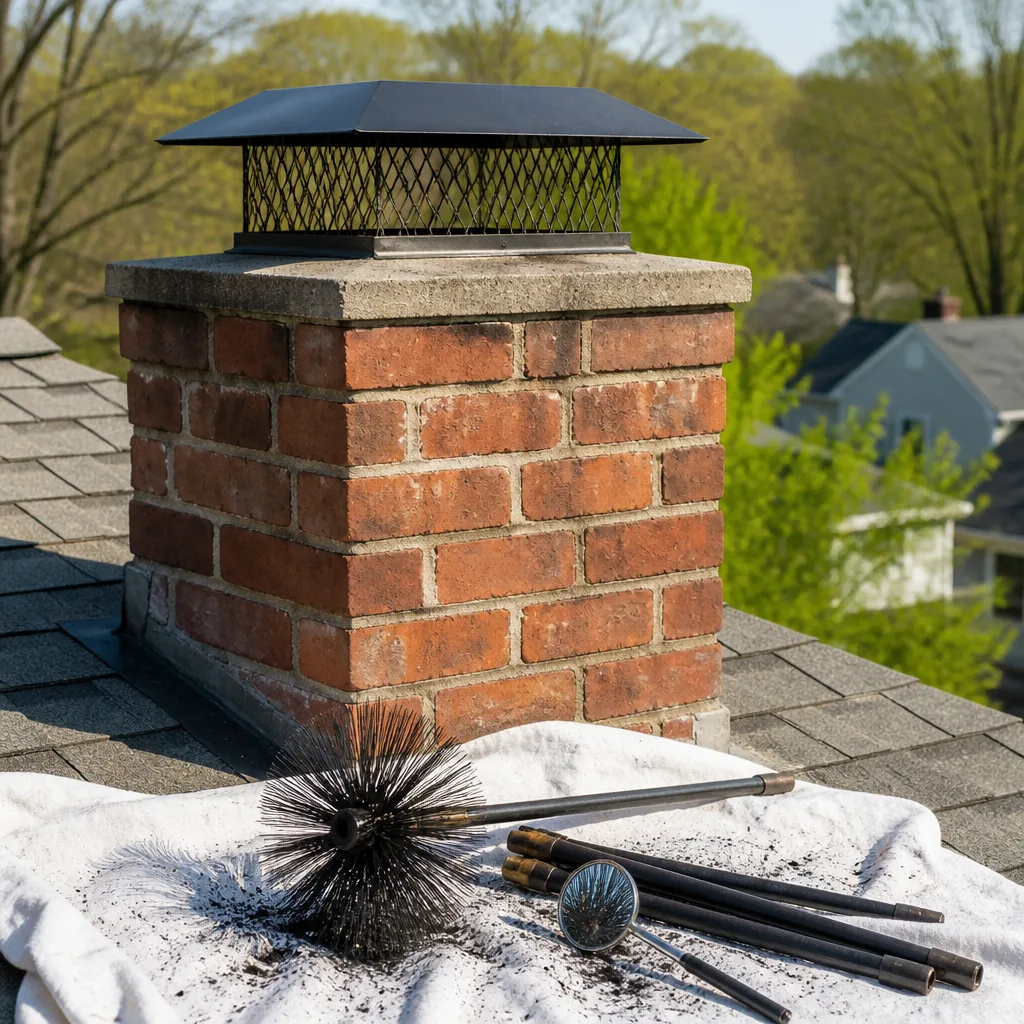 Sweep & inspection
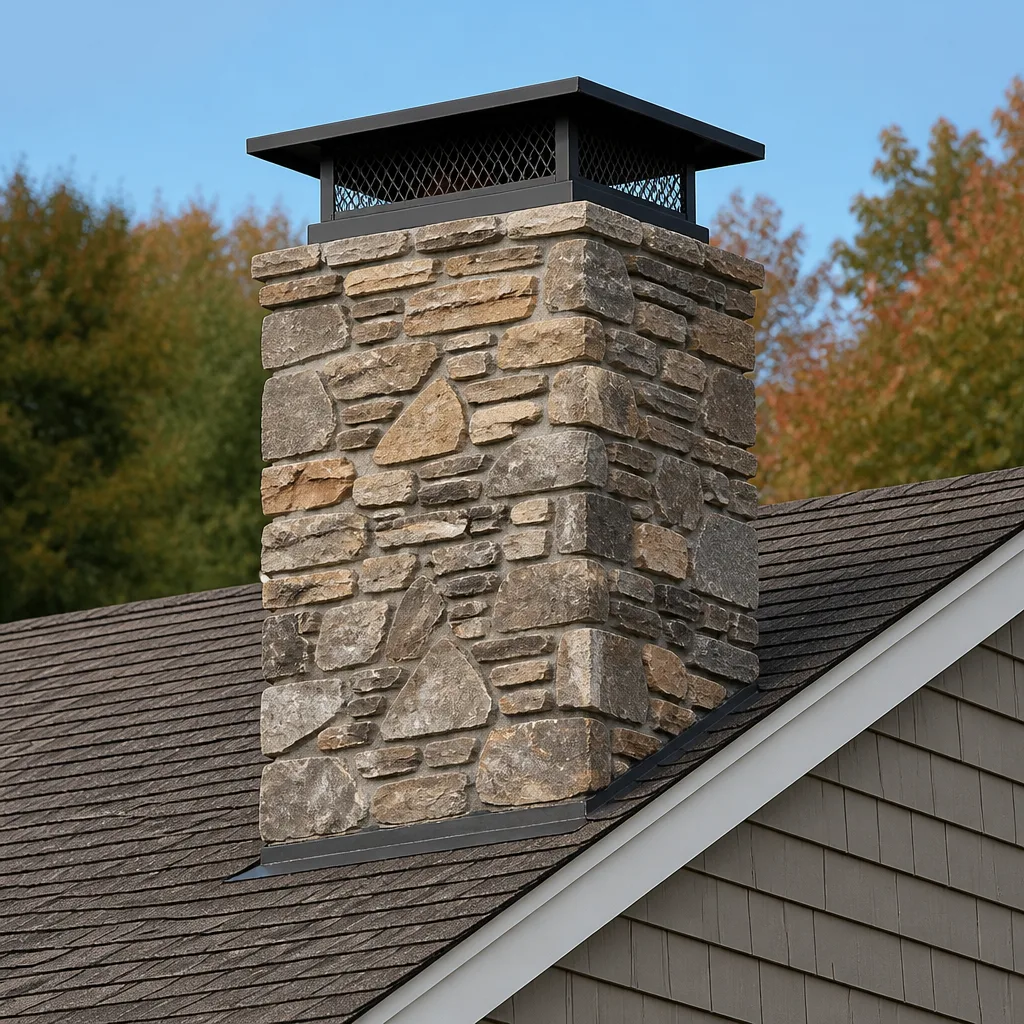 Caps & crowns
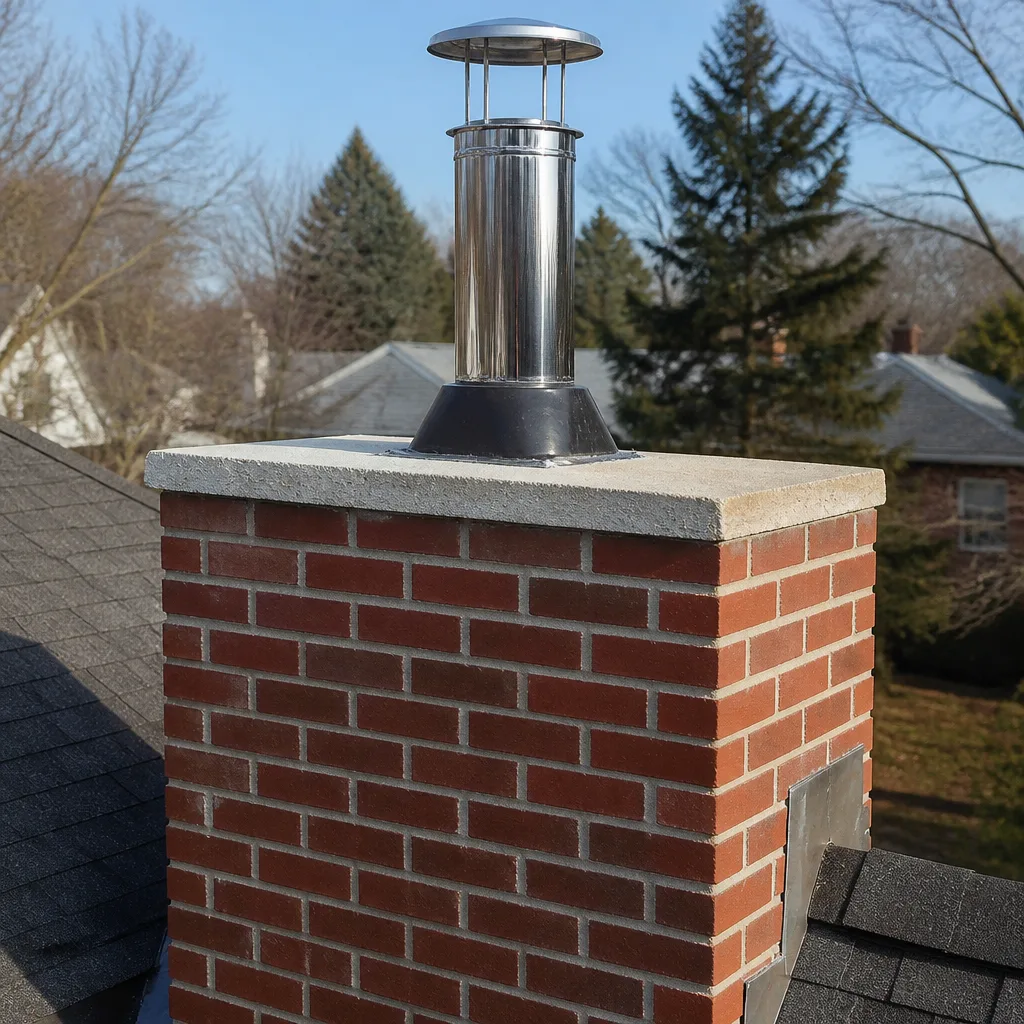 Flue relining
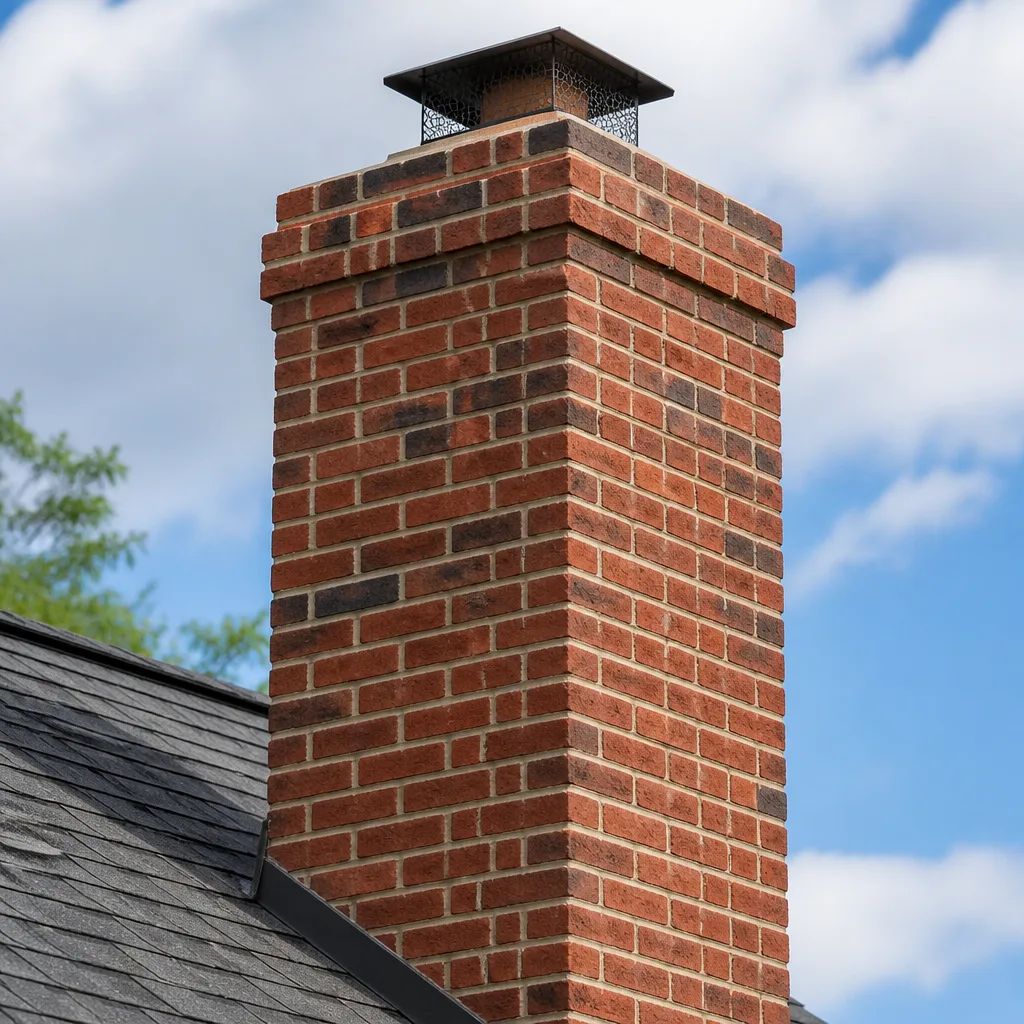 Masonry repair
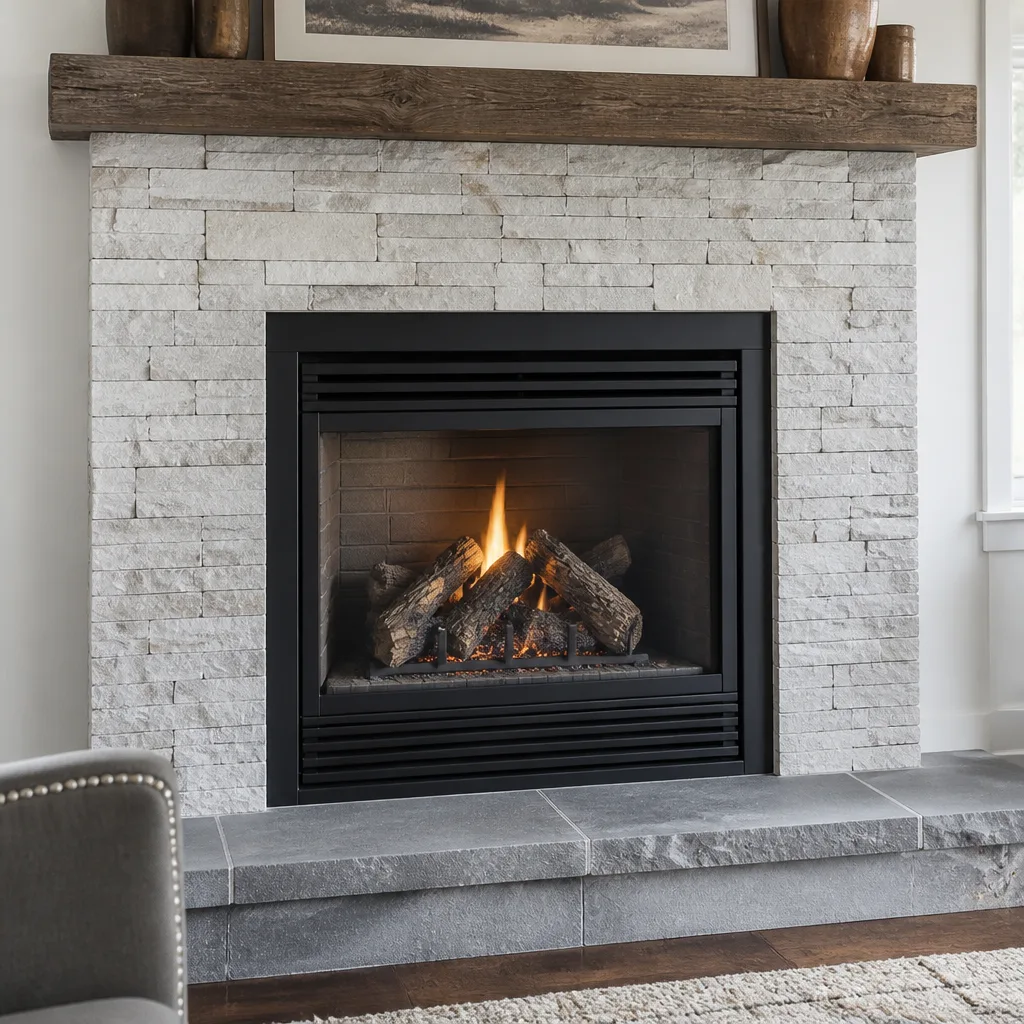 Gas fireplace service
Level 1 sweep and inspection to the NFPA 211 annual standard - flue, crown, cap, and flashing checked and photographed
Chimney sweep logs do not sweep chimneys. They loosen some creosote - which then falls where a brush and vacuum still have to collect it.
Chimney Cleaning Warning Signs: A Pittsburgh Homeowner’s Reference Guide
The warning signs that matter most in Pittsburgh chimneys rarely announce themselves. A fire that roars when you want it to feels reassuring, and a flue that draws on a cold morning feels like proof that everything is fine. But the damage that leads to expensive repairs usually develops quietly over several seasons – moisture working through masonry, mortar joints softening behind the face brick, creosote building in layers you’ll never see from the firebox. What follows is a reference for reading those quiet signals before they turn into structural failures. We’ll cover what each sign actually means, how to tell one problem from another, and when it’s time to chimney sweep and inspect.
Quick Answer
The most important chimney warning signs in Pittsburgh are efflorescence (white staining on the exterior), rust on the firebox or damper, a crown that’s cracked or tilting, smoke rolling back into the room, and a smoky smell when there’s no fire. Each of these points to a specific problem – moisture intrusion, corrosion, freeze-thaw damage, or draft failure – and each is worth a professional inspection before the next heating season. A single sign doesn’t mean disaster; a cluster of signs usually means a repair has been waiting.
Styles & brands we work with
- Sweep & inspection
- Caps & crowns
- Flue relining
- Masonry repair
- Gas fireplace service
Table of Contents
- Efflorescence vs. Dirt: What White Staining Actually Tells You
- Smoke Behavior Patterns That Point to Real Problems
- The Smoky Smell Without a Fire: Three Different Causes
- Why a Cracked Chimney Crown Is Serious in Pittsburgh
- Rust Staining on the Firebox and What It Means for Your Liner
- Creosote Stages and the Signs of a Glaze Problem
- Spalling Brick and Deteriorating Mortar Joints
- When to Call a Professional
Efflorescence vs. Dirt: What White Staining Actually Tells You
A white, chalky stain on your chimney’s exterior brick is not cosmetic, and it isn’t dirt. Efflorescence is the mineral residue left behind when water moves through masonry, dissolves salts inside the brick and mortar, and evaporates on the surface. The stain is the visible end of a process that started inside the chimney. In Pittsburgh’s climate, that moisture has usually been present for more than one season before anyone notices the color change.
The distinction between efflorescence and simple dirt staining matters because they mean different things:
- Efflorescence looks like a powdery white bloom, often in a patchy pattern following the mortar joints. Wipe a small section with a wet cloth – if it dissolves or brushes away and returns within weeks, moisture is actively moving through the masonry.
- Dirt or soot staining is dark, greasy, and doesn’t dissolve. It usually comes from the top of the flue or from poor drafting at the firebox, not from moisture.
- Green or dark algae staining on shaded sides of a chimney suggests chronic dampness rather than occasional wetting – a sign that water is being held inside the masonry for long periods.
Efflorescence tells you there’s a water pathway – a failed crown, deteriorating flashing, a missing or damaged cap, or porous brick that’s absorbed water over many winters. Each of those pathways leads to the same place if left alone: spalling brick, soft mortar, and eventually a chimney that can’t hold its own shape. When we see efflorescence during an inspection, we treat it as a moisture question first and a cosmetic question second. The fix usually starts with identifying where the water is entering, which is often at the crown or where the chimney meets the roof.
Caps and flashing from Famco and Gelco are the components that keep water out between service visits, and they’re often the missing piece on older Pittsburgh chimneys that have been leaking for years without anyone tracing the source.
Smoke Behavior Patterns That Point to Real Problems
Smoke that misbehaves is trying to tell you something specific, and the pattern it makes is the diagnostic clue. Three distinct behaviors get conflated all the time, but each points to a different kind of problem.
Smoke rollout
Smoke spilling out of the firebox opening into the room, especially when you first light a fire or when you open the door to add wood. This is a draft failure – the flue isn’t pulling air up and out as it should. Common causes include a flue that’s too cold, a firebox opening that’s oversized for the flue, a house that’s too tightly sealed and starving the fire of air, or an obstruction high in the flue.
Delayed draw
The fire lights, then smokes heavily for fifteen or twenty minutes before it settles. Delayed draw usually means the flue is slow to warm, which can happen in a cold exterior chimney. It can also mean the flue is partially blocked by a nest, a fallen cap, or a heavy creosote layer that’s restricting flow until the heat pushes past it.
Back-puffing
Puffs of smoke that pulse back into the room in rhythm with the fire – a sign of pressure instability. Back-puffing often indicates a blocked or restricted flue, but it can also come from competing exhaust fans in the house pulling air down the chimney. Structural problems, like a flue that’s separated from the chimney walls or a liner that’s collapsed, produce the same pattern.
The way to tell blockage from draft from structure is with a camera. Our chimney repair work starts with a camera inspection for exactly this reason – you can’t diagnose smoke behavior from the firebox alone. Over the years we’ve pulled nests, tarp fragments, and disintegrated caps out of flues that were producing identical symptoms to a structural crack. The camera tells you which it is before anyone quotes a repair.
The Smoky Smell Without a Fire: Three Different Causes
A chimney that smells smoky when nothing is burning is a common complaint in Pittsburgh homes, and it has three distinct causes. Figuring out which one you have narrows the fix considerably.
- Third-stage creosote. Heavy, glazed creosote that’s built up over multiple seasons gives off a sharp, acrid smell, especially in humid weather or when the house is closed up. It’s the odor of concentrated fuel residue sitting in the flue. Third-stage creosote is also the most combustible form, which is why a smell alone can justify a sweep. If the smell sharpens on warm, damp days or when the AC kicks on, this is the leading candidate.
- Animal presence. Birds, squirrels, and raccoons nest in chimneys more often than people expect, particularly in older neighborhoods with mature tree cover. Animal smells tend to be mustier and more localized – you smell it in the firebox, not throughout the house. A camera inspection settles it in minutes.
- Negative pressure. A house that’s tight, or one with a strong kitchen or bath exhaust fan running, can pull air down the chimney instead of up, bringing stale smoke smell back into the living space. This one is often weather-dependent and disappears when a window is cracked open or the fan is off.
The distinguishing test is straightforward: note when the smell appears and whether it’s stronger in the room with the fireplace or throughout the house. A smell that’s strongest in the firebox and worse in humid weather usually means creosote. A smell tied to exhaust fans or windy days usually means pressure. A smell that’s intermittent and localized with scratching sounds usually means animals. Each of the three needs a real inspection to resolve, and none of them should be left to guesswork.
Why a Cracked Chimney Crown Is Serious in Pittsburgh
The chimney crown is the concrete or mortar cap at the very top, the part that sheds water away from the flue and the masonry below it. A hairline crack in the crown is one of those things homeowners dismiss as cosmetic. In Pittsburgh, that’s a mistake, and the reason is the freeze-thaw cycle.
Pittsburgh winters swing above and below freezing repeatedly. Water gets into a crack in the crown, freezes overnight, expands, and widens the crack. It thaws the next afternoon, water runs deeper, and freezes again that night. One winter of that cycle can turn a hairline crack into a chunk of missing concrete. Two or three winters can leave the crown tilting or separating from the flue entirely, which lets water straight down into the chimney structure.
A crown that’s cracked, crumbling, or tilting is an emergency in this climate, not because the chimney will fall down tomorrow, but because every freeze-thaw cycle makes the next repair bigger. The signs to watch for:
- Visible cracks in the crown, especially those that radiate from the flue outward
- Crumbling or flaking concrete on top of the chimney
- A crown that looks tilted rather than level when viewed from the ground
- Water staining on the chimney’s exterior below the crown line
- Efflorescence concentrated near the top of the chimney
When a crown needs replacing, the work is a chimney repair rather than a sweep. We approach it as a structural repair, sized to the flue and the chimney’s actual footprint, because a crown that doesn’t overhang the masonry properly just fails again. Getting the geometry right matters as much as the material.
Rust Staining on the Firebox and What It Means for Your Liner
Rust inside the firebox, on the damper, or on the metal components of a prefabricated fireplace is a signal that moisture is getting where it shouldn’t. The metal corroding is usually the damper, the firebox liner components, or the top plate of a prefabricated system. Rust means water, and water in a metal system means the liner assembly is degrading.
Two different moisture pathways produce rust, and they call for different responses:
- Rust on the damper or firebox walls usually means water is coming down the flue – a missing cap, a damaged crown, or a leak at the top of the chimney. Rain gets past the cap, runs down the flue, and settles on the metal until it corrodes.
- Rust on the firebox floor or around the base can mean intrusion at the flashing level, where the chimney meets the roof. Water travels down the outside of the flue and finds its way to the bottom of the firebox.
On a masonry chimney, rust on the damper is a maintenance issue. On a prefabricated metal fireplace, rust on the liner is a safety issue – the liner is the barrier between the fire and the wood framing of the house, and a corroded liner can let heat and combustion gases through. If you have a prefab unit and see rust anywhere inside it, get it inspected before you use it again. This is the kind of failure where a HeatShield ceramic resurfacing assessment can sometimes address a deteriorating masonry liner without full replacement, but on a prefab metal system the answer is almost always replacement of the affected components.
Either way, the diagnosis starts with a camera inspection. Rust without a camera inspection is a guess about how deep the problem goes, and guessing is how people end up replacing more than they needed to – or missing something that mattered.
Creosote Stages and the Signs of a Glaze Problem
Creosote is the residue left when wood doesn’t burn cleanly, and it accumulates in three distinct forms. Knowing the stages matters because each stage means something different for fire risk and for how the sweeping has to be done.
- First-stage creosote is light, sooty, and flaky. It brushes off easily with a standard sweep. Every chimney accumulates a little of this between cleanings, and it’s the normal residue of ordinary use.
- Second-stage creosote is harder and more adherent – a crusty, sometimes flaky layer that takes more work to remove but still yields to proper brushes and technique.
- Third-stage creosote is glazed, hard, and burned-on, resembling tar or hardened varnish. It’s the most combustible form and the hardest to remove. It forms when the fire is regularly run cool or smoldering – closed damper, wet wood, or a flue that isn’t reaching proper temperature.
- Brick faces peeling off in flakes or chunks on the chimney’s exterior
- Crumbling or recessed mortar joints, especially those that look like a shallow groove (which means the mortar has weathered back)
- Brick fragments on the roof or ground near the chimney base
- Visible separation between the chimney and the house wall
- White efflorescence plus spalling together – a sign of active moisture movement, not past damage
- Confusing efflorescence with dirt and repointing instead of finding the water. Repointing a chimney with new mortar without fixing the crown, flashing, or cap just traps the water behind a new surface and pushes the damage deeper. Find the source first.
- Burning green or unseasoned wood to save money on firewood. Wet wood is the primary cause of third-stage creosote, and third-stage creosote is the hardest and most expensive to remove. The savings on the wood get paid back at the next sweep.
- Skipping a sweep “because the fire still draws fine.” A chimney can pull smoke perfectly well right up until the creosote layer reaches the point where it doesn’t. Draft quality is not a reliable inspection. Only the camera sees what’s in the flue.
- Assuming a chimney that smells smoky is just “old chimney smell.” The smoky smell has three possible causes, and two of them – third-stage creosote and a partially blocked flue – are the ones you actually need to know about. Dismissing it as character is how people end up with a chimney fire.
- Letting a cracked crown go through one more winter. In Pittsburgh’s freeze-thaw cycle, a crown crack widens every night it freezes and every afternoon it thaws. What was a small repair in autumn is a crown replacement in spring.
- Assuming a prefab fireplace is maintenance-free. Prefabricated fireplace systems have liners and metal components that rust and corrode. The rust you see on the firebox floor or the damper is telling you the system’s barrier is compromised – and on a prefab unit, that barrier is what keeps combustion gases out of the living space.
- Handing off the sweep and the repair to two different contractors. The contractor who sweeps should be the one who inspects, and the one who inspects should be the one who repairs. Separate contractors mean conflicting diagnoses and a repair done without the context of what the sweep found.
The signs of a third-stage problem are subtle. You might notice a shiny, dark glaze visible with a flashlight just inside the flue above the damper. You might smell the sharp, acrid odor we covered earlier. You might notice that fires are harder to start or that the firewood burns without the usual heat output – a sign the flue can’t move enough air. In our experience, third-stage creosote is far more common in Pittsburgh than most homeowners expect, because our winters encourage people to run their fires damped down to stretch the wood supply.
A standard sweep removes first and second-stage creosote. Third-stage deposits often require more aggressive mechanical removal, which is why the sweep and the inspection have to be done by someone prepared to handle what they find. The same contractor who finds the glaze should be the one who removes it – a handoff in the middle of a creosote removal is how problems get half-solved.
Spalling Brick and Deteriorating Mortar Joints
Spalling brick is brick whose face is peeling or flaking off in layers. It’s the physical outcome of the moisture problem that efflorescence announces early. When water enters brick, freezes, and expands, the brick’s surface breaks away. A chimney with spalling brick is losing its structural mass, sometimes just cosmetically and sometimes not.
The signs to look for during an annual exterior inspection:
Mortar joints soften with moisture too. Recessed or crumbling mortar is a pathway for more water, which accelerates the next round of spalling. This is exactly the cycle that a HeatShield ceramic resurfacing can sometimes address – the resurfacing rebuilds a smooth, sealed surface over deteriorating mortar joints and liner damage, giving homeowners an alternative to full liner replacement. Whether HeatShield is the right call for your chimney depends on how much structural damage is already present, and that’s a diagnosis to make on inspection, not on assumption.
It’s important to say plainly that some liner and masonry work can safely wait a season, and some can’t. The difference is evidence. With a camera inspection and photo report, you can see for yourself how far the deterioration has gone. Nothing gets recommended without that evidence, and we’ll tell you when the honest answer is “this can wait another year.”
When to Call a Professional
Some warning signs are worth watching for a few weeks. Others mean pick up the phone today. Here’s how we sort them, from least to most urgent.
Worth a scheduled inspection: mild efflorescence, minor cosmetic staining, a smoky smell that’s intermittent and tied to weather. These usually mean a repair or sweep is coming, and getting ahead of it saves money.
Worth calling soon: rust in the firebox or on the damper, noticeable spalling brick, a crown with visible cracks, smoke rollout that’s become regular. Each of these is a moisture problem that gets worse with every freeze-thaw cycle.
Stop using the chimney and call: heavy smoke rollback that doesn’t clear, back-puffing that pulses, any visible third-stage creosote, structural separation of the chimney from the house, or rust on a prefabricated metal liner. On a prefab system, a compromised liner is a carbon monoxide issue, and that’s a safety call, not a maintenance call.
Pittsburgh Chimney Cleaning offers free estimates in Pittsburgh – call (844) 761-5636. We answer 24/7. Fast dispatch from 7am to 7pm, Sunday through Friday. Our technicians have up to 14 years of experience, and every inspection comes with a camera inspection and photo report so you can see what we see.
Common Mistakes to Avoid
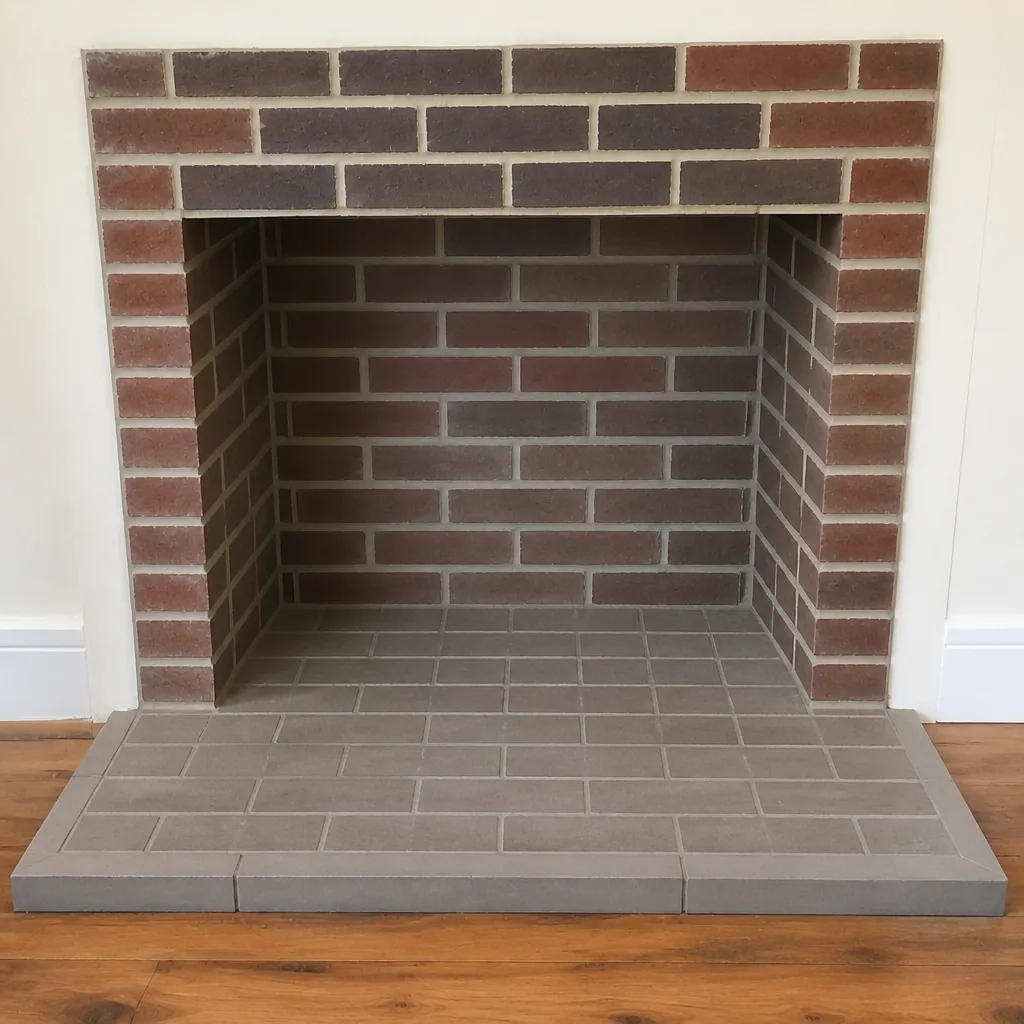
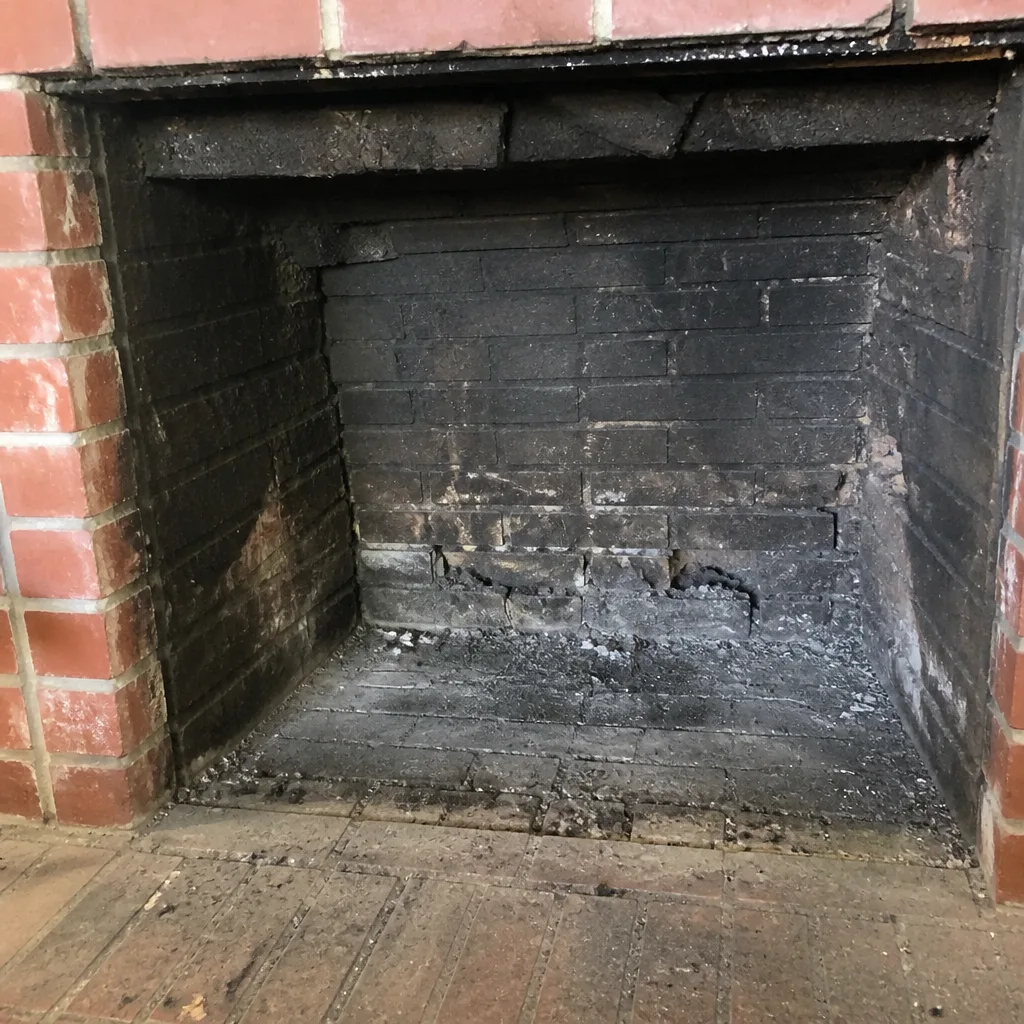
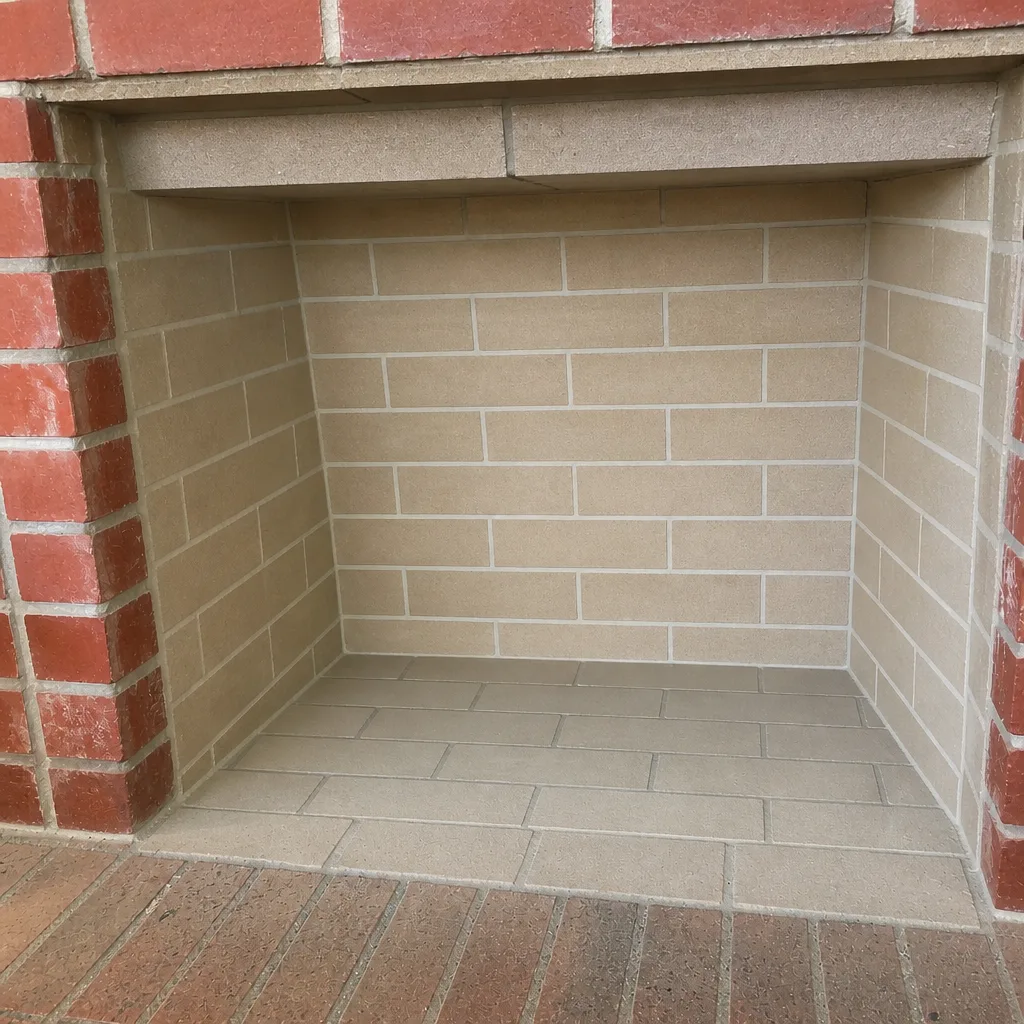
See the difference
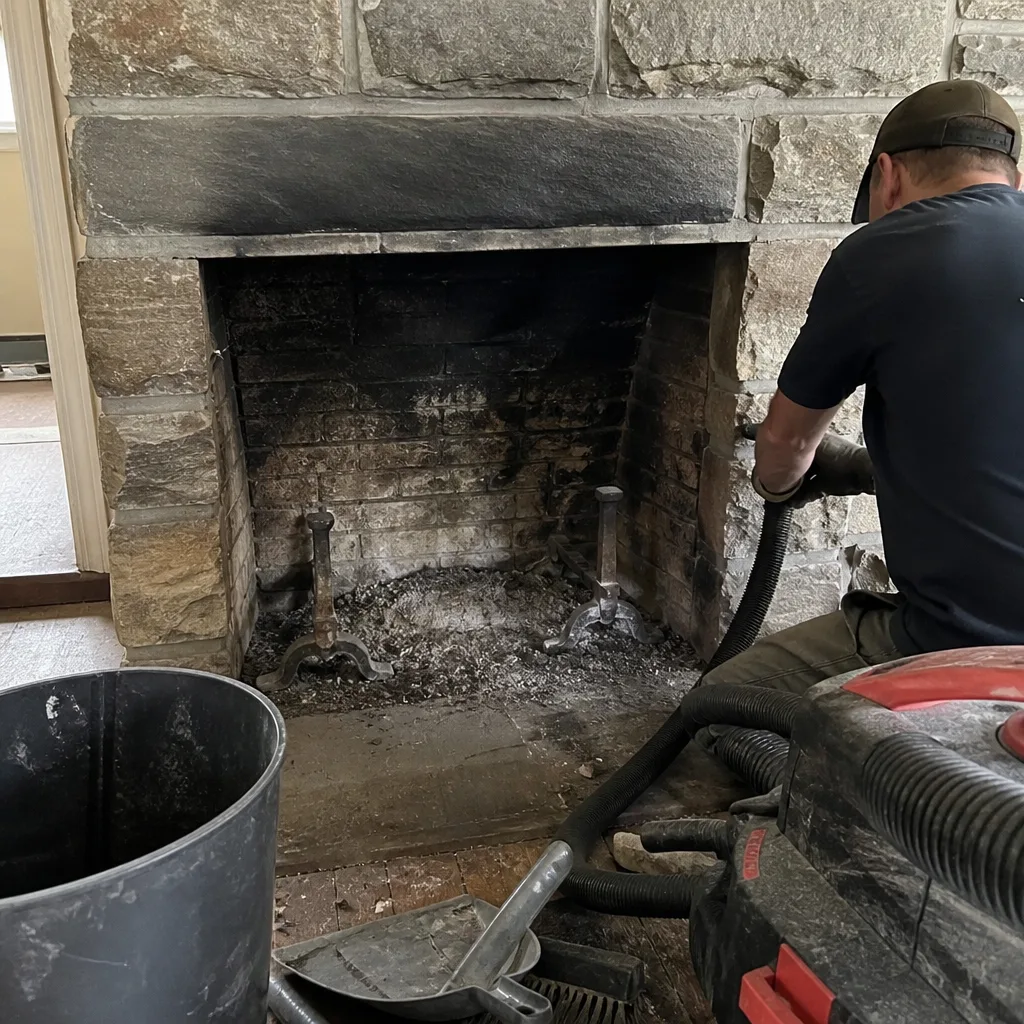 Before
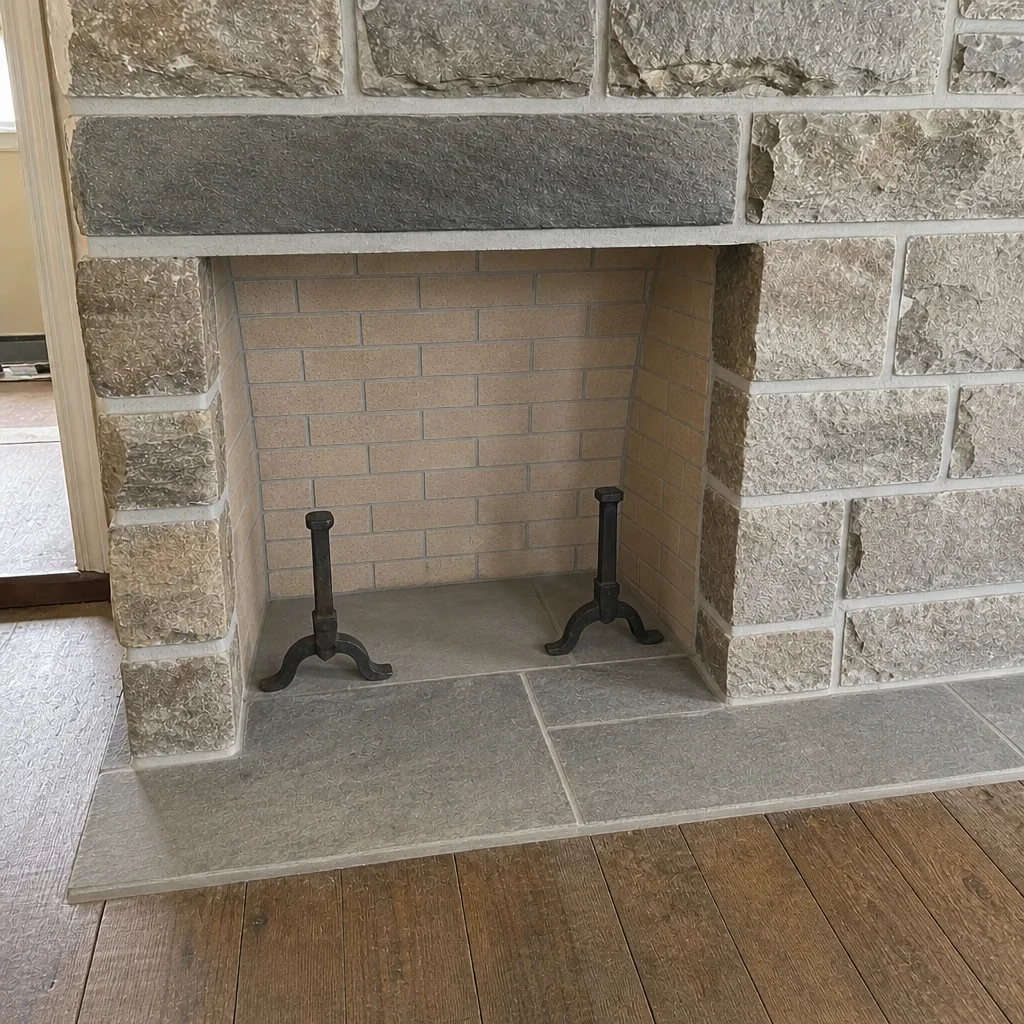 After
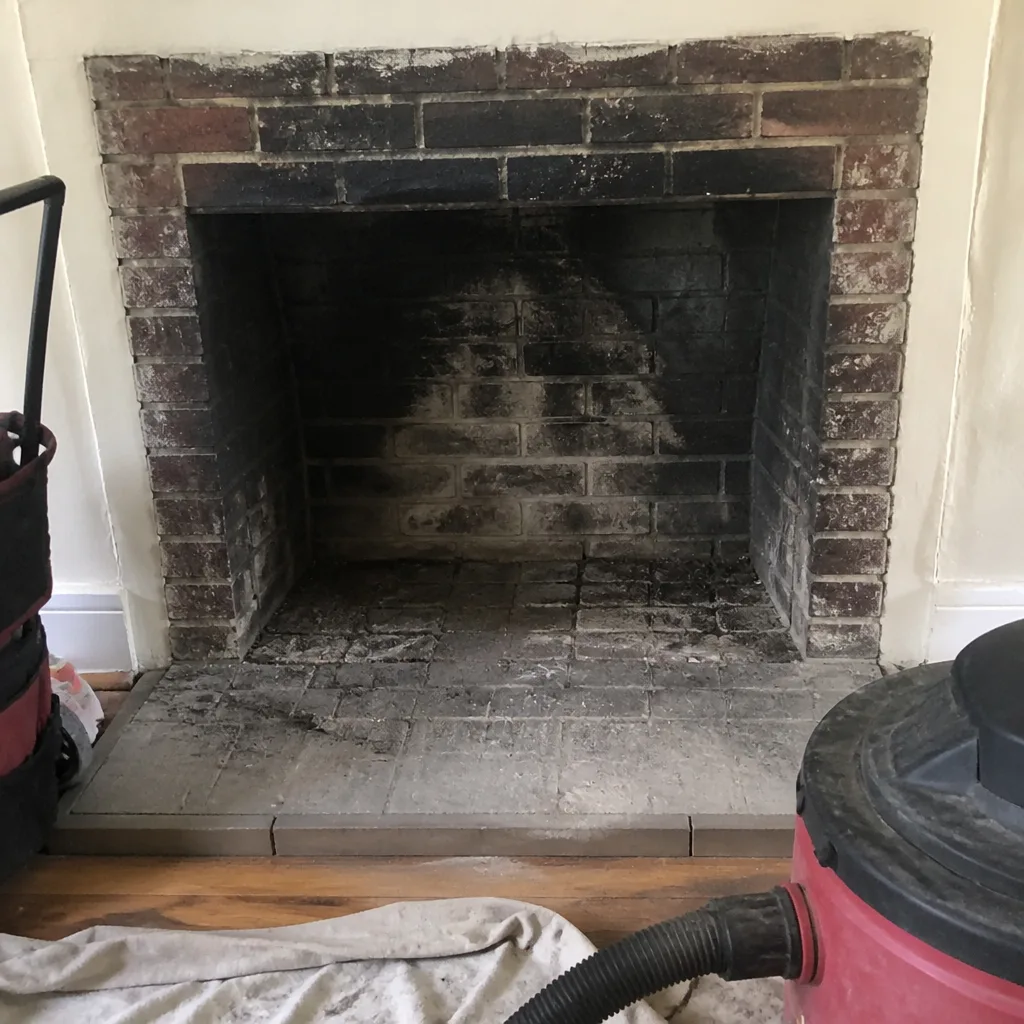 Before
 After
 Before
 After
Frequently Asked Questions
Efflorescence – the white, chalky staining on exterior brick – is the most common sign we see on Pittsburgh chimneys. It means water is actively moving through the masonry, usually from a failed crown, damaged flashing, or a missing cap. Call (844) 761-5636 for an inspection before it turns into spalling brick.
In Pittsburgh’s climate, a cracked chimney crown should be treated as urgent rather than cosmetic. The freeze-thaw cycle widens cracks every winter and pushes water deeper into the chimney structure. A crack that would stay stable in a milder climate can turn into a full crown replacement within one or two winters. We answer 24/7 – call (844) 761-5636 to book an inspection.
Efflorescence is a powdery white bloom, usually patchy and following the mortar joints, that dissolves or brushes off when wiped. Dirt and soot staining are dark and greasy and don’t dissolve. If white staining returns after you wipe it off, moisture is actively moving through the brick and the chimney needs an inspection.
A smoky smell with no active fire usually points to one of three things: third-stage glazed creosote in the flue, an animal nest, or negative pressure pulling stale air down the chimney. Creosote smell sharpens in humid weather and when the AC runs. Animal smells are localized to the firebox. Pressure-related smells appear when exhaust fans are running. A camera inspection settles which one you have – call (844) 761-5636.
Rust on the firebox, damper, or metal liner components means moisture is getting into the chimney system. On a masonry chimney it usually indicates a failing cap or crown letting rain down the flue. On a prefabricated metal fireplace it’s a safety concern, because the rusted liner is the barrier between combustion gases and the house framing. Stop using the fireplace and get it inspected.
We recommend an inspection every year, ideally before the heating season, plus anytime you notice one of the signs in this guide. The inspection-first workflow means the annual visit doubles as a sweep when necessary and a diagnostic when the fire behavior changes. Call (844) 761-5636 for a free estimate.
The Bottom Line
The warning signs that matter most in Pittsburgh chimneys are quiet ones: efflorescence, rust, a crowned crack, a smell, a subtle change in how smoke behaves. None of them are dramatic. All of them get more expensive with every freeze-thaw cycle. The way to handle them is to look – a real camera inspection, done by the same contractor who’ll do the repair if one’s needed. Here at Pittsburgh Chimney Cleaning we work with professional-grade trade brands – HeatShield for ceramic resurfacing, DuraFlex for structural relining, Famco and Gelco for caps and flashing – so a diagnosis is never a handoff. Whether you’re near the rivers in the Pittsburgh neighborhoods or out toward the hills, start with an inspection and you’ll know exactly what you’re dealing with. Call (844) 761-5636 for a free estimate. We answer 24/7. Fast dispatch from 7am to 7pm, Sunday through Friday.
Written by the team at Pittsburgh Chimney Cleaning.