
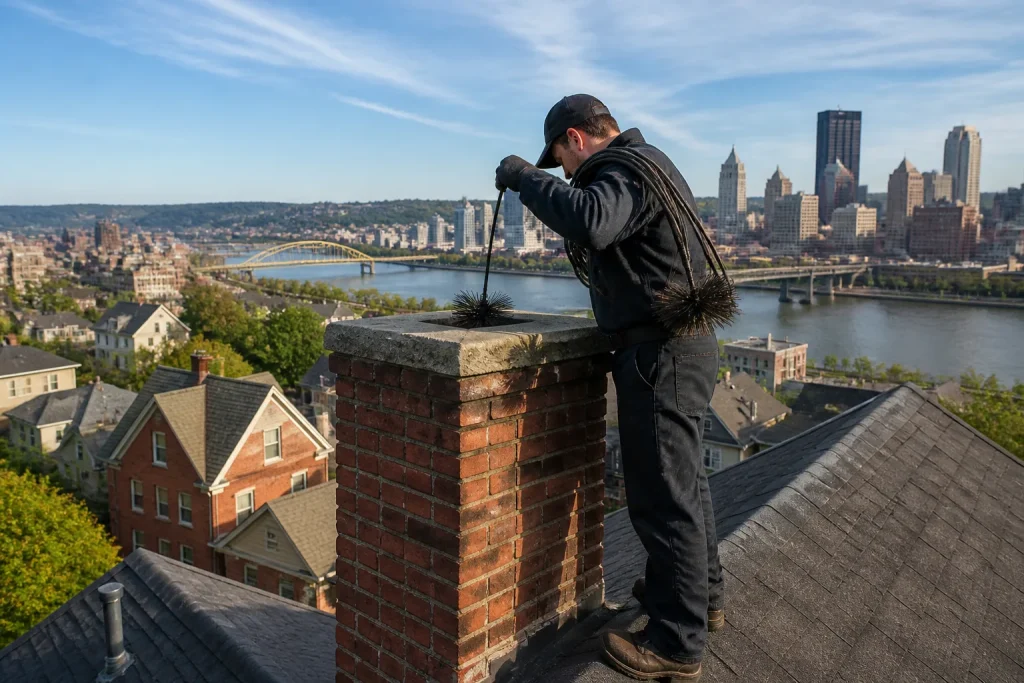
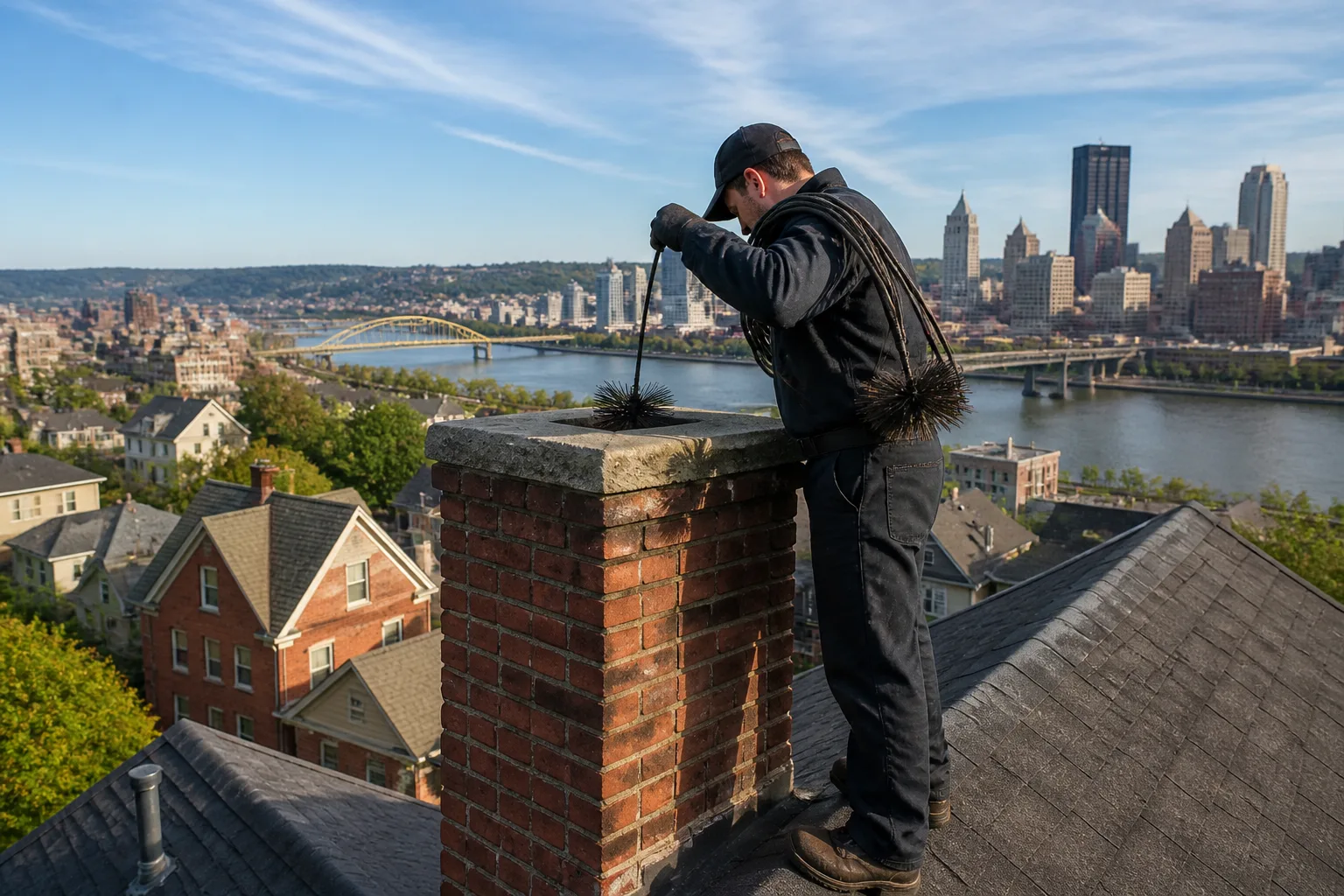
HeatShield Chimney Sweep in Pittsburgh: A Homeowner’s Guide
A cracked terracotta liner with spalled joints isn’t automatically a full reline job. HeatShield was engineered for the gap between “sweep it clean” and “tear it out and start over.” Homeowners in Pittsburgh hear the word thrown around during inspections without ever learning what it actually does, which makes it easy to approve a repair you don’t understand or refuse one you genuinely need. Here’s what the material is, what it isn’t, and how to judge the recommendation you’re given.
If you’d rather not sort it out alone, call (844) 761-5636. We answer 24/7.
What Is HeatShield, Exactly?
HeatShield is a castable ceramic flue sealant, not a cleaning product. It’s a two-part compound that sets inside the flue and forms a smooth, joint-sealing surface rated to 2100°F. It restores the liner’s ability to contain combustion gases rather than replacing the liner itself.
The confusion usually starts at the name. “HeatShield chimney sweep” gets searched a lot, but sweeping and resurfacing are separate jobs that happen to be done by the same trade. A sweep removes creosote. A HeatShield application rebuilds the interior surface of a flue that has deteriorated. The material is a ceramic-based compound that a technician casts against the flue walls, sealing gaps, filling spalled mortar joints, and creating a continuous barrier. It cures into a hard surface that stands up to the heat a wood fire produces.
That puts it in a different category from a stainless steel liner insert. A stainless liner is a new pipe slid down the existing flue. HeatShield works with the liner already there. One replaces; the other restores. Knowing which one your chimney actually needs is the whole decision.
At Pittsburgh Chimney Cleaning, we work with HeatShield as one of our professional-grade materials, alongside DuraFlex, Gelco, Olympia Chimney, Famco, and Copperfield. Professional-grade means specified for the system it’s going into, not picked off a shelf at a home center.
HeatShield vs. a Stainless Steel Liner: When Each One Is Correct
HeatShield is the right choice when the liner’s structure is intact but its surface has failed. A stainless liner insert is correct when the structure itself is gone, cracked through, or too badly damaged to hold a resurfacing coat. Getting that distinction wrong is where money gets wasted.
Here’s how the two compare in plain terms:
- HeatShield: restores a deteriorated but structurally sound liner. Seals joints, smooths the interior, addresses spalling mortar. Usually less expensive than a full insert.
- Stainless liner (DuraFlex or similar): replaces a failed or missing liner entirely. Required when there are cracks through the flue tile, a collapsed section, or no liner at all.
- Neither: sometimes the liner is fine and the only real problem is creosote. That’s a chimney sweep and nothing more.
The deciding factor is structural integrity, not appearance. A flue can look rough on camera and still be a strong HeatShield candidate. A flue can look smooth and have a hairline crack running through a tile, which rules resurfacing out. Only a proper camera inspection settles it.
The CSIA framework treats these as distinct repair categories, and a technician working to that standard should be able to tell you which category your chimney falls into and why. If the answer is vague, ask for the camera footage.
What Makes a Liner a Candidate for HeatShield?
A liner qualifies for HeatShield when the flue tiles are intact, the joints between them have opened up or spalled, and the overall structure can still support a resurfacing layer. It does not qualify if there are through-cracks, a collapsed section, or missing liner entirely.
The criteria a trained inspector is checking come down to a few questions:
- Are the flue tiles themselves unbroken, or is there a crack running through the tile body?
- Are the joints between tiles open, offset, or missing mortar?
- Is there any spalling, where the surface of the terracotta has flaked or crumbled?
- Is the flue the correct size and shape for the appliance venting into it?
- Is the liner continuous from top to bottom, or are there gaps at offsets?
Joints and spalling are the sweet spot. HeatShield seals those and rebuilds the surface. Through-cracks are a different story. A crack that goes all the way through a tile means combustion gases have a path out of the flue regardless of what you coat the inside with. In that case a stainless insert is the safe answer, and no amount of resurfacing fixes it.
The other criterion is appliance compatibility. A wood stove, an open fireplace, and a gas appliance all vent differently, and the flue has to match. The inspection has to account for what’s actually connected before anyone recommends a repair.
Why Pittsburgh’s Older Masonry Makes This Relevant
Pittsburgh has a deep stock of pre-1960 masonry housing, and original terracotta liners from that era tend to fail in a predictable way: joint mortar breaks down and the tile faces spall. Those are exactly the failure patterns HeatShield was designed to address.
Original terracotta liners installed decades ago weren’t always built to the standards a modern liner meets, and time does what time does. The mortar between flue tiles is the first thing to go. It dries, cracks, and falls out, leaving open gaps where gases can escape or moisture can get in. The tile faces spall next, especially on chimneys that have seen repeated heating and cooling.
What you end up with is a flue that’s structurally sound but leaky at the joints. That’s not a teardown situation. It’s a resurfacing situation. And for a homeowner in a Pittsburgh house with original masonry, HeatShield often means avoiding a full reline entirely.
The other thing that matters here is deferral. Plenty of chimneys in Pittsburgh haven’t been looked at in years, and the longer a failing joint goes unsealed, the more likely a resurfacing job turns into a replacement job. The repair is cheaper the earlier it’s caught.
What Does the Application Actually Involve?
HeatShield application is a three-phase job: a camera assessment of the flue, a joint repair phase, and the sealant application itself. Each phase is real labor, and knowing what happens in each one helps you understand what you’re paying for.
Phase one: inspection. A camera goes down the flue and the technician maps every joint, crack, and spalled area. This is where the decision gets made. Nothing should be recommended before this footage exists, and you should be able to see it.
Phase two: joint repair. Open or missing joints get addressed before any sealant goes in. Filling gaps first gives the ceramic compound a surface to bond to and keeps the finished liner intact over time.
Phase three: application. The HeatShield compound is applied to the flue walls and cast into place, forming a continuous, smooth interior surface rated to 2100°F. It cures into a hard ceramic finish that seals the flue and restores its performance.
A proper application takes time and prep, which is why it’s a repair rather than a quick service call. The full picture belongs under chimney repair, and when it’s done right, you should get documentation of before and after.
How Does HeatShield Compare on Cost?
HeatShield resurfacing typically costs less than a full stainless liner installation, which involves a new pipe, insulation, fittings, and a longer labor window. The savings are real, but only when resurfacing is the technically correct repair.
The logic is straightforward. A stainless liner replaces the whole flue pathway. HeatShield restores the one you already have. Fewer materials, less demolition, shorter job – so the number comes in lower. When your liner qualifies, spending less is also the smarter long-term decision, because you’re fixing the actual problem rather than replacing sound structure.
When the liner doesn’t qualify, though, the cheaper option isn’t cheaper. It’s a repair that won’t hold, and you’ll be back at the start. That’s why the inspection comes first and the recommendation follows the evidence, not the other way around. Every estimate is written per job and sets the final price.
One thing worth saying plainly: if your chimney only needs a sweep, we’ll tell you that. A technician with up to 14 years of experience knows the difference between a dirty flue and a failing one, and recommending a resurfacing job on a chimney that just needs cleaning helps nobody.
When to Call a Pro
Call a professional if a camera inspection hasn’t been done in years, if you’re seeing cracked or crumbling material inside the firebox, if smoke is backing into the room, or if you have a wood stove or gas appliance venting through a liner of unknown condition. These are cases where a homeowner can’t safely assess the situation, and the stakes are carbon monoxide and chimney fire, not cosmetics.
Resurfacing a flue with a castable compound at high temperature is not a homeowner project. The prep, the joint repair, and the application all require equipment and training, and a poor application can make things worse than they started. Liners are also a confined-space job, and that’s before you get to the fire risk.
Related services in Pittsburgh: chimney sweep and chimney repair. Start with an inspection – then you know exactly what you’re dealing with.
The Bottom Line
HeatShield is a resurfacing system for deteriorated but structurally sound flue liners, rated to 2100°F, and it’s a genuinely cost-effective alternative to full relining when the chimney qualifies. It does not fix through-cracks, collapsed sections, or missing liners – those need a stainless insert. Pittsburgh’s older masonry housing is exactly the kind of stock where resurfacing does its best work, because original terracotta liners tend to fail at the joints and surfaces rather than the tile bodies.
If you’re in Pittsburgh and need help, Pittsburgh Chimney Cleaning offers free estimates – call (844) 761-5636. We answer 24/7. Fast dispatch from 7am to 7pm, Sunday through Friday. Our technicians have up to 14 years of experience, and we work with HeatShield, DuraFlex, Gelco, Olympia Chimney, Famco, and Copperfield. One contractor from sweep through repair – no handoffs, no conflicting opinions. Restoration before replacement, and when HeatShield can do the job, we’ll say so.
Frequently Asked Questions
No. HeatShield resurfacing restores an existing liner that’s structurally sound but has failing joints or spalled surfaces. A stainless steel insert replaces a liner that’s cracked through, collapsed, or missing entirely. If your liner has structural damage, resurfacing won’t hold and an insert is the correct repair. Call (844) 761-5636 for an exact quote – estimates are free.
A camera inspection determines it. The technician looks for intact flue tiles, open or missing joint mortar, and spalling surfaces – the conditions HeatShield is built to fix. Through-cracks or missing liner sections rule it out. You should be able to see the footage yourself. Call (844) 761-5636 for an exact quote – estimates are free.
Typically yes, when resurfacing is the right repair, because it uses the liner you already have instead of installing a new pipe. The savings disappear if the liner doesn’t qualify and the repair fails. The written estimate sets the final price. Call (844) 761-5636 for an exact quote – estimates are free.
Only if the liner is clean and sound. A sweep addresses creosote; it does nothing for failing joints or spalled tile. If the joints are open, gases can escape the flue even after a fresh cleaning, which is a carbon monoxide concern. The inspection tells you which situation you’re in. Call (844) 761-5636 for an exact quote – estimates are free.
Written by the team at Pittsburgh Chimney Cleaning.
Need Chimney Cleaning Help?
Call Pittsburgh Chimney Cleaning - licensed & insured, with free written estimates in Pittsburgh.
(844) 761-5636